LVP vs. LVT: Which Luxury Vinyl Is Right for Your Room
QUICK ANSWER: The short version of LVP vs LVT: luxury vinyl plank (LVP) is shaped like wood boards and prints a hardwood look, while luxury vinyl tile (LVT) comes in squares or rectangles that copy stone and ceramic. Both use the same layered, water-resistant build, so day-to-day performance runs close. The real decision is the look you want and how hard the room gets used. Plank tends to suit open living areas and hallways; tile fits kitchens, baths, and mudrooms where a stone look reads right. And the wear-layer thickness matters more for lifespan than the plank-versus-tile question ever will.
You're holding two vinyl samples in the store, and they feel almost identical in your hand. One is a long board printed to look like oak. The other is a square meant to pass for slate. Same weight, same click along the edges, same promise on the label. So which one belongs in your kitchen, and which one goes down the hallway? That question trips up a lot of homeowners around Marietta, because the two products are closer cousins than the marketing lets on.
We install both every week across the Atlanta metro, from Kennesaw split-levels to Buckhead condos. Most of the time, the right answer has nothing to do with which material is "better." It comes down to the room, the moisture, and how the floor is going to get lived on.
LVP and LVT: Same Family, Different Shape
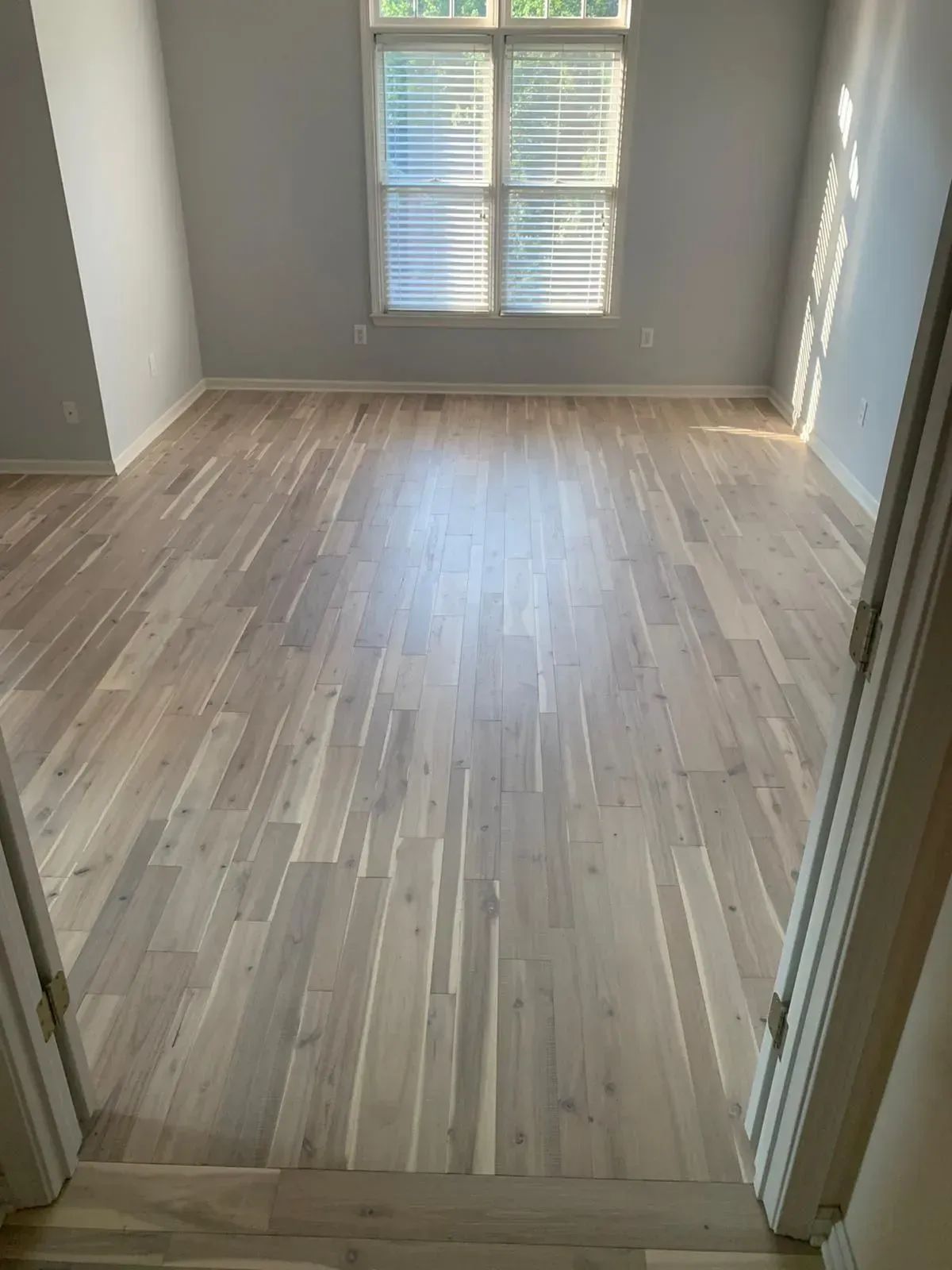
Luxury vinyl plank and luxury vinyl tile are two formats of the exact same material. LVP is milled into long, narrow boards that mimic hardwood, right down to the grain, the knots, and the color shifts you'd see in real oak or hickory. LVT shows up as tiles or rectangles that copy stone, ceramic, or porcelain, so you get the cool, gridded look of a tiled floor without the grout headaches.
That shape difference does more than change the look. A run of plank flows in one direction and makes a room read longer, which is why open living rooms and hallways tend to feel bigger with LVP down. Tile invites patterns. You can set LVT on a diagonal, mix two tones, or lay a border, and it fits the way people already picture a kitchen or bath.
Here's the part that surprises folks. Under the print, the two are built the same way and hold up about the same. Both resist water, shrug off spills, and clean up with a broom and a damp mop. The choice between them is mostly style and how the room gets used, not raw toughness.
What's Actually Inside the Plank or Tile
Peel back a piece of luxury vinyl and you'll find a stack of layers doing different jobs. There's a backing on the bottom, a rigid core in the middle for strength, a high-definition photo layer that carries the wood or stone image, and a clear top coat called the wear layer. That top coat is the part that decides how long your floor keeps looking new.
The wear layer is a see-through film, usually polyurethane, that acts as a sacrificial shield. When a dog's nails drag across it or a chair slides back from the table, the wear layer takes the scuff so the printed image underneath stays clean. It gets measured in mils, and that unit confuses almost everyone. A mil is one-thousandth of an inch, not a millimeter. For a sense of scale, a sheet of printer paper runs about 4 mils thick.
Match the mils to the traffic
For a light-use bedroom, a 12-mil wear layer holds up fine. For a busy household with kids and pets running through the kitchen, 20 mil is the safer call, and 30 mil or more is built for commercial floors. A thick plank with a thin wear layer will still scratch, so don't let overall thickness fool you. The clear coat on top is what fights the scratches.
The core is a separate spec
You'll see SPC and WPC rigid cores on the label. That core controls how stiff and stable the board or tile feels underfoot, and it's what lets modern vinyl float over a subfloor that isn't perfectly flat. Plank and tile can both come with either core, so this isn't an LVP-versus-LVT thing. It's a quality thing worth asking about.
Matching the Floor to the Room
Room by room, the two formats sort themselves out pretty naturally once you think about use instead of looks alone.
Living rooms, bedrooms, and hallways lean toward LVP. The wood look carries warmth into a space where people relax, and the long boards run clean through open floor plans without breaking up the eye. A plank's format also flexes a little under rolling furniture and heavy foot traffic, which is handy in a den where the couch gets pushed around and the kids treat the hall like a racetrack.
Kitchens, baths, mudrooms, and laundry rooms are where LVT earns its keep. A denser tile holds up well under a heavy fridge or a stacked washer, and the stone look fits those rooms the way a wood look fits a bedroom. Both formats are water-resistant, so either one survives a splash. The pick here is usually about the design you're after, not whether the floor can take the moisture.
There's real overlap, and that's fine. Plenty of Alpharetta homes we've worked in run LVP straight through the kitchen and into the living room for one continuous wood look, no transition strip in sight. Other clients in Decatur want the kitchen to feel like a tiled room and the rest of the house to feel like wood, so we split the two. Neither call is wrong.
Installation Changes the Feel of a Room
How the floor gets attached matters as much as which format you pick. There are three common methods, and we choose based on the room and the subfloor.
Click-lock is the floating approach. Planks or tiles snap together and rest over the subfloor without glue, which makes for a clean install and an easy fix if a board ever gets damaged. Glue-down bonds each piece straight to the floor. It's the sturdier choice for a heavy-traffic kitchen or a wide open space where you want zero movement underfoot. Loose-lay uses a heavy, grippy backing that stays put on friction alone, so single tiles pull up and swap out without a fight.
Once the field is down, we cut in around cabinets and corners, then set baseboards or trim to cover the expansion gap the floor needs to breathe. That gap is easy to overlook, but it's what keeps a floating floor from buckling when the material expands in the heat. The finish work is where a rushed job shows, so we take our time on the edges.
TIP: Bring home a few samples and set them on the floor in the actual room, not the store. Look at them under your own lights, morning and evening. Wood-look plank and stone-look tile both read very differently once they're out of fluorescent lighting and sitting next to your cabinets and walls.
Where People Get It Wrong About "Waterproof"
The word "waterproof" on a vinyl label sells a lot of floors, and it's mostly true, with one catch worth understanding. That rating describes the surface. Spill a glass of juice, wipe it up an hour later, and the floor doesn't care. The plank or tile itself won't absorb it.
The weak point is underneath. If water gets under the floor from a slab that wasn't tested, a slow dishwasher leak, or standing water left to sit, it can slip past the locking seams and sit against the backing. That's not a knock on the material. It's a reminder that the surface being waterproof and the whole floor system staying dry are two different things. Good subfloor prep and quick cleanup do more to protect a vinyl floor than any spec on the box.
WARNING: Don't drag heavy furniture across luxury vinyl, and don't count on the wear layer to save you. Even a 20-mil top coat can gouge if a fridge or a loaded bookshelf slides across it. Lift heavy pieces or walk them on furniture sliders, and stick felt pads under every leg once they're in place.
Frequently Asked Questions
Is LVP or LVT better for a kitchen?
Both work, so it's mostly a look call. LVT gives a stone appearance and holds up under a heavy fridge or dishwasher. LVP runs a wood look through from an adjoining living room. Either handles kitchen spills fine.
Does LVP or LVT hold up better with dogs?
The format barely matters. What matters is the wear layer. A 20-mil or thicker clear coat resists nail scratches and tracked-in grit far better than a thin 12-mil layer. Pick the thicker wear layer for any pet-heavy room.
Can I use LVP and LVT in the same house?
Yes, and many homes do. A common setup runs LVP through living areas and bedrooms for a wood feel, then switches to LVT in kitchens and baths. As long as thicknesses match, transitions at doorways stay clean.
How long does luxury vinyl flooring last?
With proper installation and normal care, luxury vinyl plank and tile generally last 15 to 25 years. Wear-layer thickness and traffic are the biggest factors. A thin wear layer in a busy hallway wears out faster than a thick one.
Is luxury vinyl a good choice for Georgia humidity?
It's one of the better picks for our climate. Vinyl doesn't swell or cup like solid wood when the air stays damp through Atlanta summers. The key is testing and prepping the subfloor, since slab moisture is the real risk.
Does thicker vinyl mean a better floor?
Not by itself. Overall thickness in millimeters reflects the core and rigidity. The wear layer, measured in mils, reflects scratch resistance. A thick plank with a thin wear layer still scuffs easily, so check both numbers first.
Choosing With the Room in Mind
Picture the floor a year from now, not the sample in your hand today. The plank or tile that looks sharp under store lighting still has to survive muddy paws in Kennesaw, a summer of humidity in Decatur, and whatever the family drags across it on a Tuesday. Once you know how a room actually gets used, LVP versus LVT stops being a coin flip and starts being an easy call. The look you love and the way you live can point to the same floor, and usually they do.
That's the kind of read that's hard to get from a showroom sample alone — it takes someone standing in your actual rooms, seeing your actual light and traffic. Based in Marietta, Georgia, GHI Floors
has spent over 13
years helping homeowners across the region make that call with confidence. If you're ready to see how it plays out in your space, a free in-home consultation is the easiest place to start — a pro will walk your rooms and match plank or tile to your space, your traffic, and Georgia's climate.