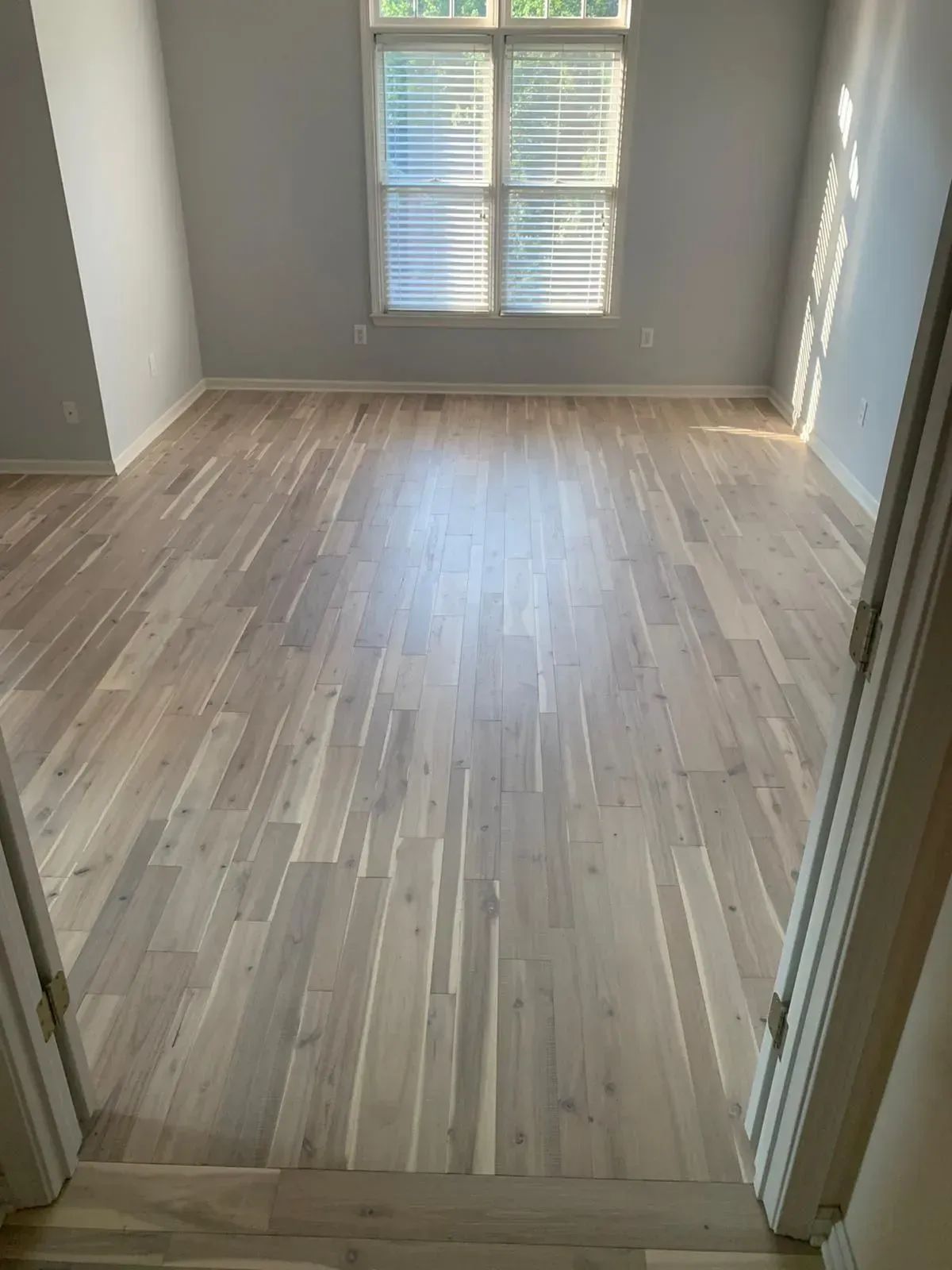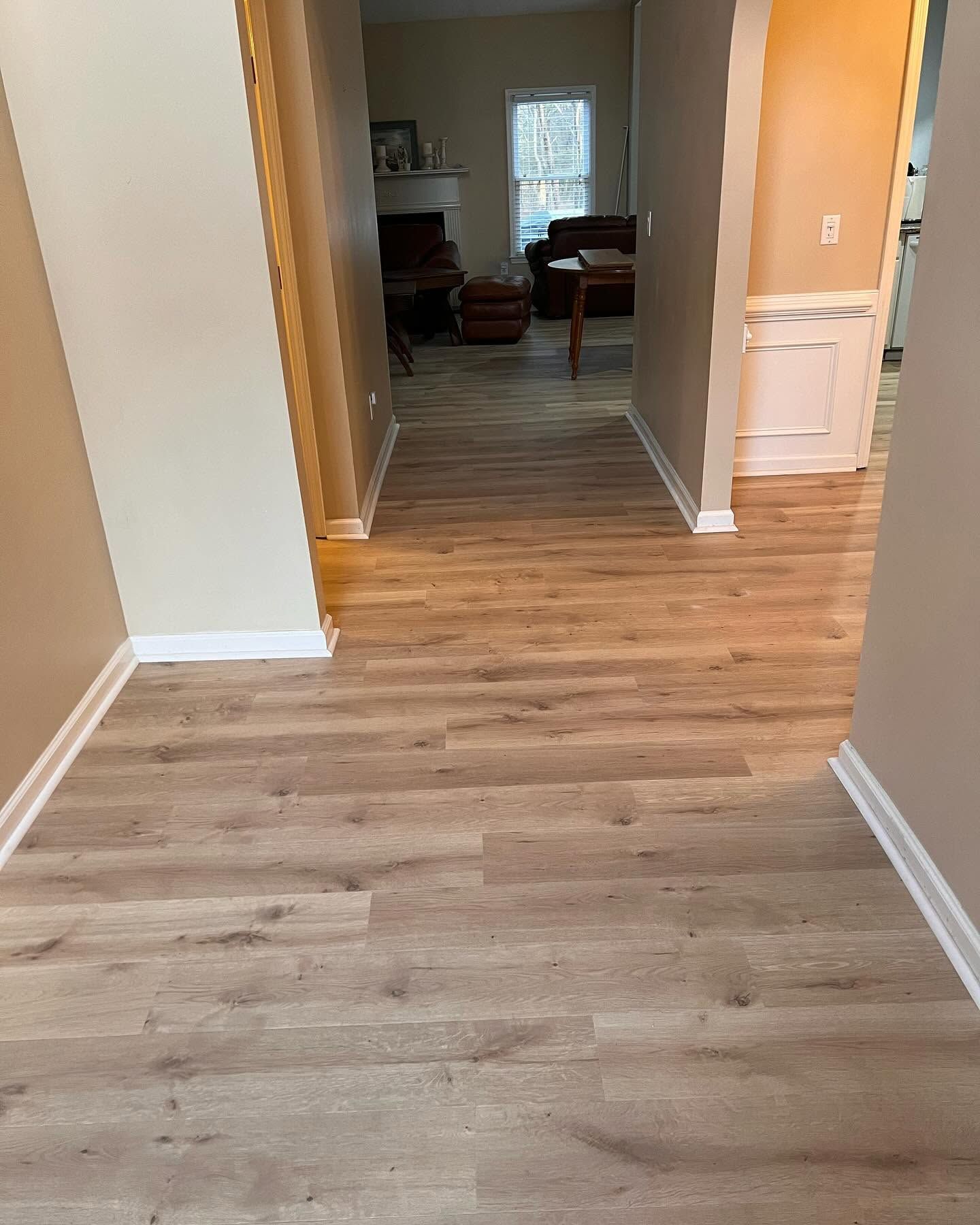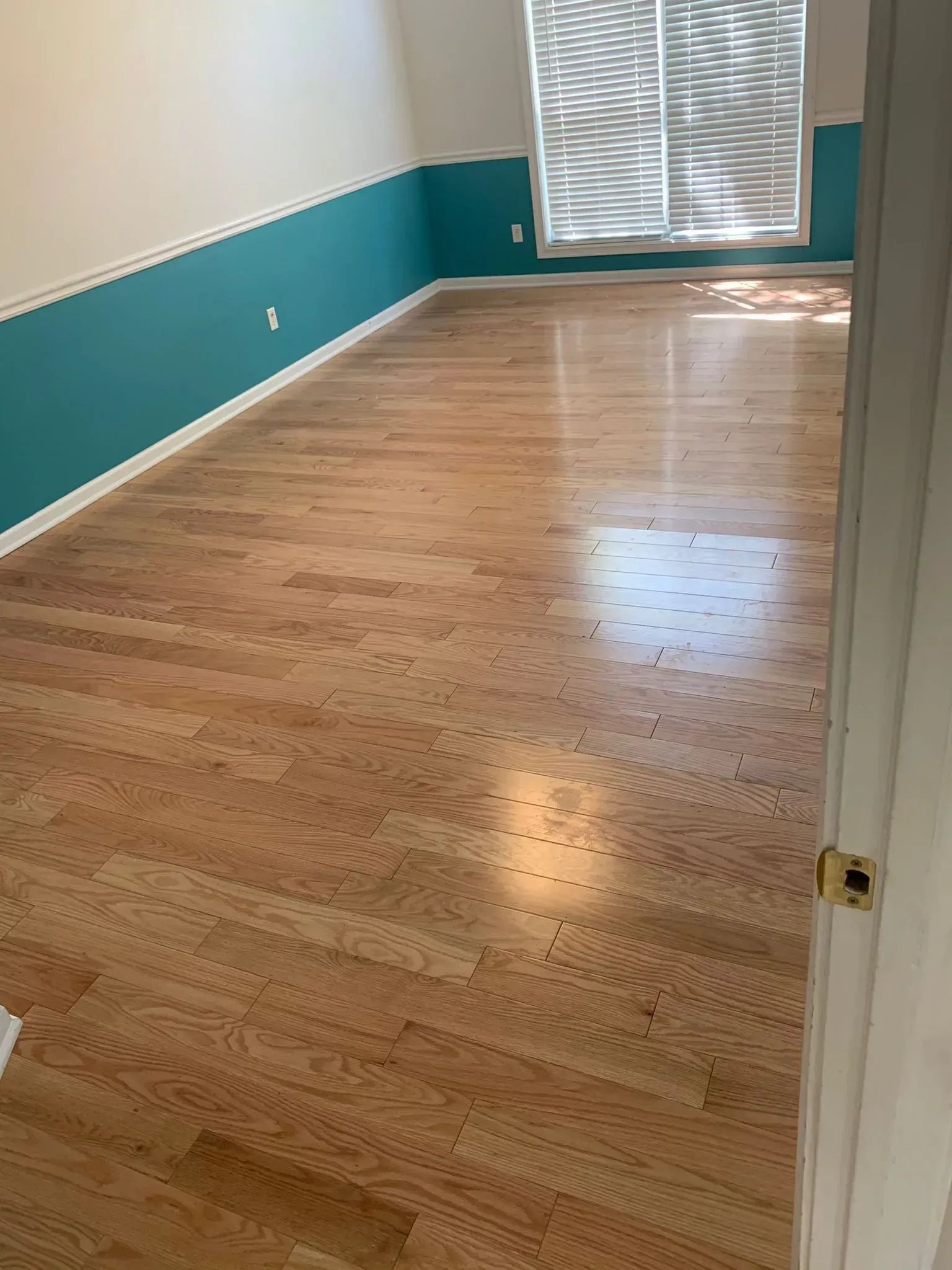
Wide Plank vs Narrow Plank Hardwood: How Board Width Changes Room Perception and Resale Value
You walk into a room and something feels off. The floors are hardwood, the finish is clean, the color is fine, but the space feels smaller and busier than it should. Nine times out of ten, the culprit is board width. The homeowner chose narrow planks in a room that needed wide ones, or wide planks in a space that couldn't absorb them, and the result is a floor that fights the room instead of working with it.
Board width is one of the most consequential decisions in a hardwood installation, and it gets less attention than species, finish, or stain color. The standard range runs from about 2.25 inches on the narrow end to 7 inches or wider on the broad end. That spread affects visual proportion, structural behavior over time, and what a buyer perceives when they walk through during a showing. Getting it right means understanding how your specific rooms, your home's age, and Georgia's humidity patterns interact with the floor you choose.
How Board Width Changes the Way a Room Feels
Plank width controls the number of seams a viewer's eye processes when scanning a floor. Narrow planks, typically 2.25 to 3.25 inches, produce more seams per square foot. More seams create visual rhythm and texture, but they also introduce more horizontal lines that the brain reads as division. In a small room, that rhythm compounds the existing boundaries and the space contracts further.
Wide planks, generally 5 inches and above, produce fewer seams and more uninterrupted wood grain per board. The eye travels farther before encountering a joint, which reads as openness. A 12 by 14 foot bedroom installed with 6 inch wide planks will feel measurably more spacious than the same room installed with 2.25 inch strips, even with identical species and finish.
Direction matters as much as width. Planks running parallel to the longest wall extend perceived length. Running perpendicular to entry points draws the eye inward and makes rooms feel deeper. When you combine wide planks with a directional layout that follows natural sight lines, the effect compounds.
Ceiling height is a factor most homeowners overlook.
Rooms with 8 foot ceilings can feel crowded by very wide planks because the proportions tip toward horizontal dominance. In rooms with 9 to 10 foot ceilings, wide planks ground the vertical height and create balance. In Marietta's older neighborhoods where ranch homes and split levels are common, this proportion check matters before any purchase decision.
What Board Width Does to Structural Behavior
This is where the practical side of the choice becomes apparent. Hardwood expands and contracts with changes in humidity, and wider boards move more than narrow ones because there is more material across the width to respond to moisture change.
Georgia humidity cycles are significant. Metro Atlanta averages around 70 percent relative humidity in summer and drops considerably in winter when heating systems run. That seasonal swing of 20 to 30 percentage points creates real movement in solid hardwood. A 6 inch wide plank will expand and contract roughly two to three times as much across its width as a 2.25 inch strip under the same conditions. Properly acclimated and installed material handles this movement, but the margin for error is smaller with wide planks.
Subfloor quality becomes more important with wider boards. Any unevenness in the subfloor that a narrow strip might bridge will telegraph through a wide plank. We see this regularly on service calls in older Marietta homes where subfloors have settled or shifted. Narrow strip floors sometimes forgive minor imperfections. Wide plank floors do not.
Engineered construction addresses the movement concern directly. Wide plank engineered hardwood uses a cross ply core that resists seasonal movement far more effectively than solid wide plank. For homes with radiant heat, slab foundations, or rooms with elevated humidity variation, engineered wide plank is often the more practical path to the visual result a homeowner wants.
Diagnostic Table: Matching Board Width to Room and Home Type
| Room or Condition | Recommended Width | Reason | Caution |
|---|---|---|---|
| Small room under 120 sq ft | 3 to 4 inch | Limits visual busyness without compressing space | Avoid going wider than 4 inch |
| Open concept living and dining | 5 to 7 inch | Unifies large continuous space | Match direction to main sight line |
| Older home with 1940s to 1960s character | 2.25 to 3.25 inch | Matches historical proportions | Wide plank can feel anachronistic |
| New construction with 9 ft+ ceilings | 5 to 7 inch | Balances vertical scale | Confirm subfloor flatness first |
| Home with slab foundation in Georgia | Wide plank engineered | Resists humidity movement from slab | Solid wide plank is higher risk here |
| Narrow hallway or galley kitchen | 3 to 4 inch, run lengthwise | Avoids visual width compression | Wide plank in narrow space adds clutter |
| Master bedroom, relaxed traditional style | 4 to 5 inch | Enough visual weight without overwhelming | Direction should follow longest dimension |
| Historic home in Marietta's older districts | 2.25 to 3.25 inch or wide face nail style | Preserves period accuracy | Wide plank may not match existing floors |
| Basement level installation | Engineered only, any width | Moisture from grade requires stable core | No solid hardwood at or below grade |
How Board Width Affects Resale Value
Buyers respond to floors before they consciously evaluate them. Wide plank hardwood has become one of the clearest signals of a renovated or upgraded interior, and it photographs well in listing photos, which is where most buyers form their first impression.
In active markets, updated hardwood flooring consistently ranks among the top features that accelerate time on market. Wide plank floors in particular photograph as high end regardless of species or stain. The visual spaciousness reads as "bigger home" in thumbnail images, which drives more showings.
The species and finish still carry the resale story. Wide plank white oak with a matte finish commands more attention than wide plank pine with a glossy finish. Width improves perception, but the full package of species, finish, and quality of installation determines whether buyers see craftsmanship or a cosmetic upgrade.
Narrow strip floors are not a liability if they suit the home. A 1955 ranch in east Cobb County with original 2.25 inch red oak strip floors in good condition reads as authentic and well maintained. Ripping those out to install wide plank in a period renovation can actually work against resale by breaking historical character. The right width is the one that fits the home's era and architecture, not the one that is currently trending.
Expert Hardwood Guidance From a Team That Knows Georgia
Board width is a structural and visual decision that shapes how every room performs for years after installation. The choice between wide and narrow plank comes down to your room dimensions, your home's era, your subfloor condition, and how you plan to manage indoor humidity through Georgia's seasonal swings. Getting those variables right before you select a product is what separates a floor that serves the home from one that creates ongoing problems.
Marietta's combination of older housing stock, slab on grade construction in many neighborhoods, and significant seasonal humidity variation means these decisions carry more consequence than they would in a drier climate. At GHI Floors, we have spent 13
years installing, repairing, and refinishing hardwood throughout Marietta, Georgia. If you are working through a width decision or ready to schedule a site assessment, we are the team to call.
Frequently Asked Questions
Does wide plank hardwood make a small room look bigger or smaller?
Wide plank reduces seam count, making rooms feel more open. Running planks along the longest wall extends perceived length. In rooms under 100 square feet, 4 to 5 inch boards balance proportions better than boards 6 inches or wider, which feel heavy in tight spaces.
Which board width holds up better over time in Georgia's climate?
Narrow boards tolerate Georgia's humidity swings better since each plank moves less across its width. Wide plank engineered hardwood performs reliably and is what we typically recommend for that look. Solid wide plank requires whole home humidification and careful subfloor prep to prevent seasonal gapping.
Does board width affect how often hardwood needs to be refinished?
Board width does not change refinish frequency. Wear is driven by traffic, finish type, and maintenance habits. Wide plank shows scratches more visibly since each board has more exposed surface. Narrow strip spreads wear across more seams, making traffic patterns slightly less noticeable over time.
Will wide plank floors go out of style and hurt resale value later?
Wide plank has led residential design for over a decade and matches new construction. Neutral species like white oak in a matte finish read as enduring rather than trendy. Heavily tinted or distressed finishes carry more long term stylistic risk than a clean, natural finish.
What subfloor condition is required before installing wide plank hardwood?
Wide plank requires a subfloor flat within 3/16 inch over a 10 foot span. Deviations need correction first. In Marietta we grind high spots or apply leveling compound before starting. Skipping this is the top reason we get called back for squeaking and joint failure.